



Traditions
Unveil the history and meaning behind popular wedding traditions and customs from various cultures and religions.
Wedding traditions come from many cultures and religions, and each one has a history and a meaning behind it. Knowing where a custom comes from helps you decide whether it belongs in your own ceremony.
The guides in this section explain popular traditions and customs, so you can keep the ones that matter to you and leave the ones that do not. Talk to your families early, as some customs carry a lot of meaning for the people who grew up with them.
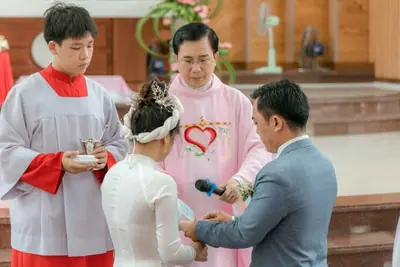
Do You Need to be Christened to Get Married in a Church?

Do I Need To Take My Wedding Ring Off At Airport Security?
A Few Customs And Where They Came From
Something old, new, borrowed and blue
This is an English rhyme from the Victorian era, and it also mentions a sixpence in the shoe. The items were meant to bring luck, and most couples now pick things with personal meaning, such as a grandmother's brooch, rather than anything lucky.
The ring on the left hand
In much of the West, the wedding ring goes on the fourth finger of the left hand. A common story says a vein runs from that finger directly to the heart. Anatomy says otherwise, so treat that as a nice legend. In some countries the ring goes on the right hand, so check what your families expect. If you'll be traveling with yours, here's what to do with a wedding ring at airport security.
Throwing rice, and what replaced it
Rice, wheat and other grains were thrown as a wish for plenty. Many venues now ban them, because they're hard to clean, so couples use birdseed, dried petals, confetti or bubbles instead. Always ask the venue what it allows.
The veil, the garter and the bouquet
Each of these has an old story attached, from warding off bad luck to deciding who marries next, and none of them is required. If a custom makes you or your family uncomfortable, you can drop it, change it or keep the part you like.
Faith And Family Customs
Religious customs are different from a charming tradition, because they usually carry real obligations. A church may ask for proof of baptism or a course before the wedding. A family may expect a certain ritual because their parents and grandparents did. Ask early, and ask what the custom means to the people who care about it, because that's often the part you can keep.
Readings are a good way to bring tradition into a ceremony without a full ritual. Our readings section has collections for religious and civil ceremonies, and the speeches section covers who speaks and in what order.